Researchers at the Institute of Biomedical Engineering, have secured £85k from the Medical and Life Sciences Translational Fund (MLSTF) to advance a new approach to vaccine delivery. The funded project, “Programmable Cutaneous Delivery of mRNA Vaccines Using Flexible Electroosmotic Micropumps,” is led by Dr Massimo Mariello, Materials and Biomedical Engineer and Senior Research Associate in Bioelectronics, and Prof Christopher Proctor, Associate Professor in Bioelectronics, in collaboration with researchers from the Jenner Institute, internationally recognized centre of excellence in vaccine research, development, and translational medicine, based within Oxford’s Nuffield Department of Medicine.
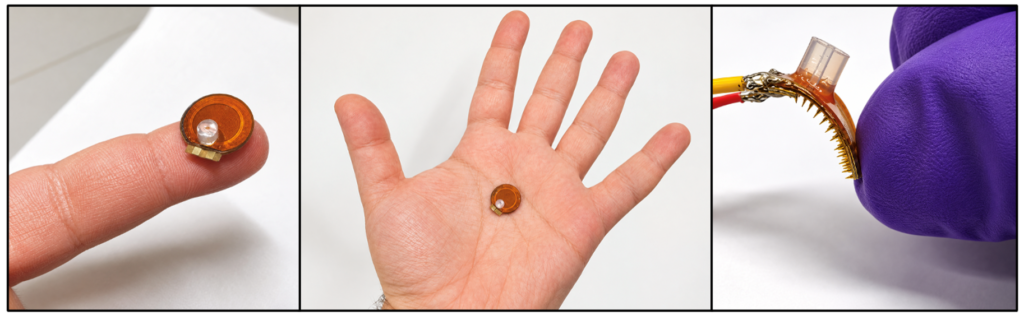
The project aims to explore the use of flexible, miniaturized, electrically-driven micropumps for the controlled delivery of mRNA vaccines through the skin. The proposed electronically-controlled approach offers the potential to precisely regulate the delivery of therapeutic formulations using compact and programmable devices. By combining expertise in soft bioelectronics, microfluidic technologies, and vaccine research, the team aims to investigate an alternative approach to conventional vaccine administration, with potential advantages in transdermal delivery control, device miniaturization, and adaptability to broader biomedical applications, including targeted treatments for neurological disorders and cancer therapies.
The award will support early-stage translational research to assess the feasibility of this technology and advance its development towards future biomedical applications. The Medical and Life Sciences Translational Fund, administered through the Translational Research Office (TRO) of the University of Oxford’s Medical Sciences Division, supports research projects aimed at translating promising scientific and technological innovations towards practical medical and healthcare applications. This interdisciplinary project highlights the opportunities arising from collaborations between Oxford’s engineering and medical sciences communities, bringing together advanced bioelectronic technologies and vaccine research to explore new approaches to therapeutic delivery. The project also aligns with the broader innovation and commercialization ecosystem supported by Oxford University Innovation (OUI), the University’s technology transfer company, which facilitates intellectual property protection, industry partnerships, licensing, and the development of spinout opportunities. Together, these initiatives provide a valuable framework for advancing interdisciplinary research towards real-world biomedical applications.